
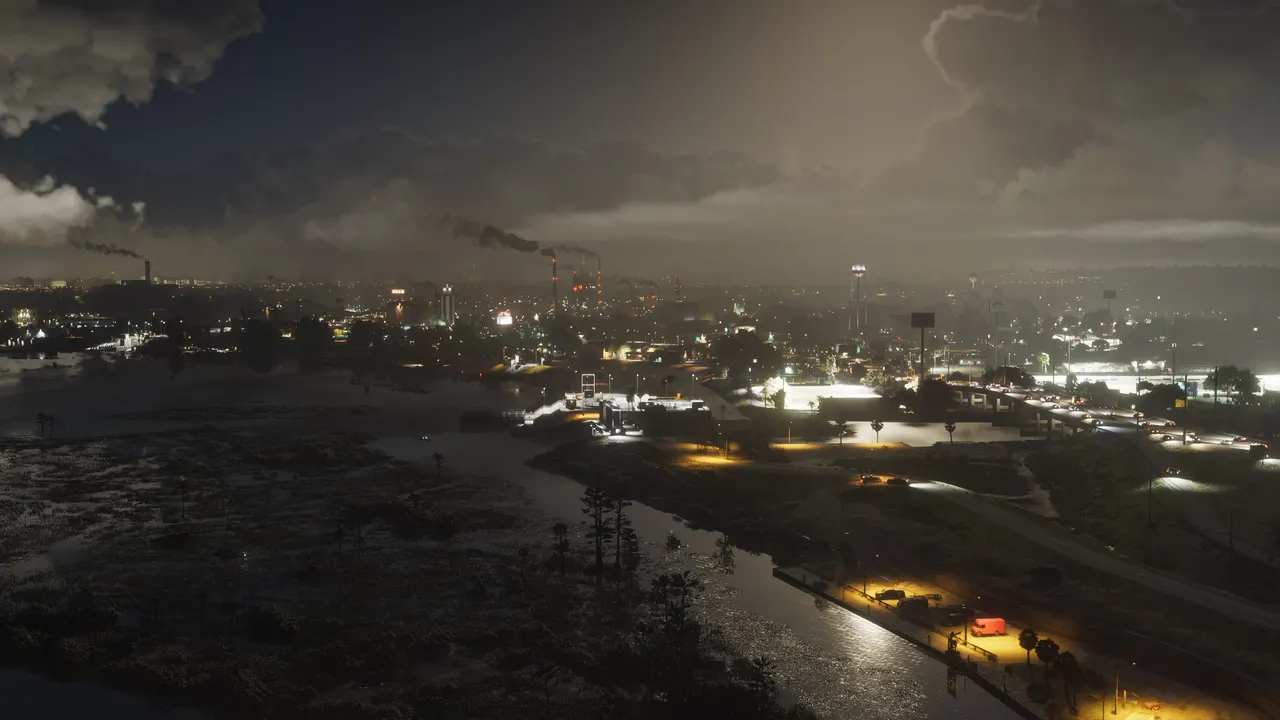
- Boots: No
- Release: None
- File: None
Leonida and Your Own Copy: Dumping, Assets and Ownership
Leonida works only from the builder's own Xbox Series copy. This guide explains the own copy rule, what asset export does, and why nothing leaves the builder's PC.
Contents
The Own Copy Rule
Leonida works only from the builder's own copy of the game. The repository contains no game files, no keys and no executable, and it does not explain how to obtain a copy. The builder's game folder must already hold its files readable on disk, in the form the project recognises: a folder holding the game configuration file and the archive files, as plain files. The build recognises the version from file names, sizes and hashes, without reading large files unnecessarily.
Leonida own copy is not a slogan on this site. It is the operating rule of the whole project, and it answers a large share of reader questions before they are asked. The build guide shows what the rule means in practice. There is no shared copy, no community copy, and no copy that Leonida provides. A reader without their own copy cannot build the project, and no guide on this site will help them obtain one, because the project deliberately gives no such help.
What Asset Export Does
Asset export reads the builder's own package and writes its contents into Leonida's own form, on the builder's own PC. Models are exported with real names, UV coordinates and material references: a ten archive scan recovered 382,781 models with no readback decode failures, including 343,327 from the largest archive. Texture dictionaries and world texture pools are decoded from their packed formats, with a clean room decoder completing the formats a strict decoder skips, and limitations recorded in a manifest rather than silently dropped. Audio banks are exported whole, with Opus repackaged losslessly and other streams decoded to WAV where requested.
Music and radio configuration is measured rather than fully understood: 1,589 audio configuration records with exact durations and stream identifiers, station grouping and content lists, but no per track start offsets. That partial understanding is reported as partial, which is the project's habit throughout. Export counts prove the pipeline can read the package. They do not prove the game runs, and they are never presented as proof of that.
Everything Stays on Your PC
Everything the build creates comes from the builder's game and stays on the builder's PC: generated shaders, extracted assets, the runtime folder and saves. The project warns builders never to share those files, and contributors are asked never to attach game files, extracted assets or generated shaders to issues or pull requests. That rule protects the builder, the project and the readers who might otherwise pass files around without understanding what they are.
The build also records which decoder and tool versions produced each export, so an upgrade re-exports only what changed, and older work folders get one fresh export after upgrading. That bookkeeping is part of the same care: exported data is treated as the builder's own derived work, kept locally, rebuilt deliberately, and never treated as a distributable product. The licence and independence explained page covers the legal shape of the project itself, which is separate from the ownership of game data.
Readable on Disk, Nothing More
The project's wording on the copy is precise: the files must already be readable on disk. Nothing in the repository decrypts anything or works around any protection, and nothing explains how to reach that state. Readers sometimes ask what that means in practice, and the honest answer is that the project draws its line there and stops. This site draws the same line. It explains what the build does with a readable copy, and it does not explain how to make a copy readable.
That restraint is also practical. A build that depended on a particular way of obtaining a copy would break whenever that way changed, and a guide that described it would age badly and mislead. The version check, the hash comparison and the export pipeline are stable, documented and testable. They are the part of the story this site can tell completely, and it tells them completely.
What Gets Exported, and What Stays Put
The asset pipeline reads the builder's own package and writes the project's own portable format. Nothing is downloaded, nothing is uploaded, and nothing leaves the builder's PC. The table below names what the status table says was exported, with the measured figures it gives.
| Asset type | Exported | Detail |
|---|---|---|
| Models | 382,781 | OBJ with real names, UVs and material references, 343,327 from levels.rpf |
| Textures | Dictionaries and world pools, DDS | BCPack decoding with recorded limitations in the export manifest |
| Audio banks | Whole, Opus and XMA2 | Opus repackaged losslessly as Ogg Opus, PCM as WAV, XMA2 decoded with ffmpeg |
| Music and radio config | Measured | 1,589 audio-config records with exact durations and stream ids, no per-track start offsets |
Everything the build creates, the generated shaders, the extracted assets, the runtime folder and the saves, comes from the builder's game and stays on the builder's PC. The README says never to share those files. That rule is not a courtesy: the files are derived from a copy the builder owns, and sharing them would distribute game data the project itself never distributes. Keep the export local, keep the manifest with it, and treat the recorded limitations in that manifest as part of the result, not as fine print.
Conclusion
Leonida's own copy rule is simple and absolute: your copy, your PC, your build, and nothing leaves. Asset export turns that copy into models, textures and audio the new runtime can use, counted and checked at every step, with limitations recorded rather than hidden. A reader who owns the Xbox Series copy and accepts the rule can attempt the build. A reader who does not should stop here, because there is no other lawful or honest way into this project.
Frequently Asked Questions
Does Leonida provide the game?
No. The project provides tools only. All game data comes from the builder's own copy, on the builder's own PC.
Can I share the files a build creates?
No. The project warns never to share generated shaders, extracted assets, the runtime folder or saves. Keep them on your own PC.
What version of the game does Leonida recognise?
Version 1.0.2.1 of the Xbox Series package, recognised by file names, sizes and hashes.